



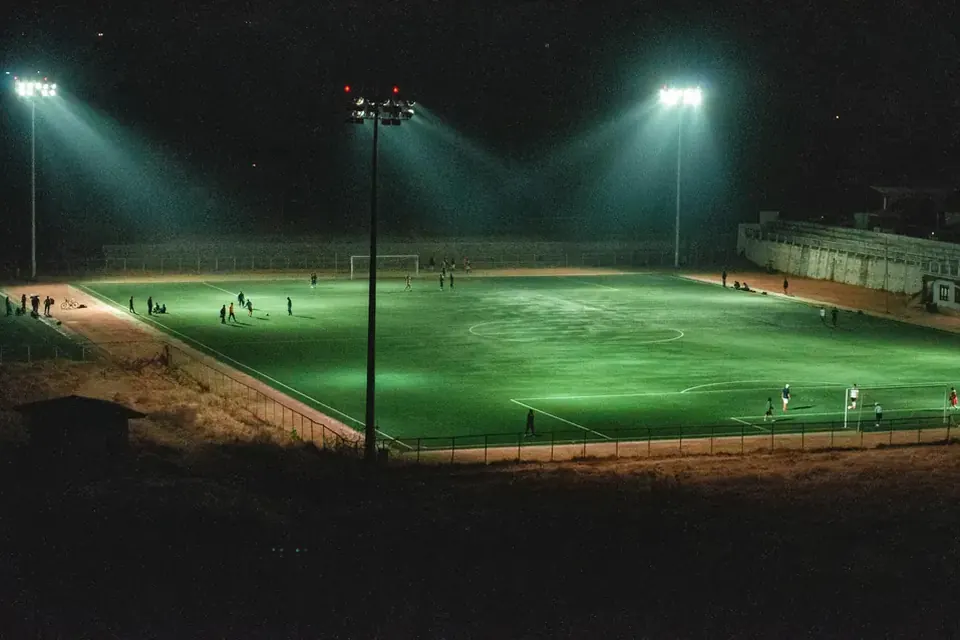
Academy Facilities Upgrade: A New Era for Liverpool’s Youth Development
The recent upgrade to Liverpool FC’s academy facilities represents more than just a renovation of brick and mortar. It signals a strategic recalibration of the club’s long-term vision, one that acknowledges the ever-increasing importance of homegrown talent in an era of financial fair play constraints and inflated transfer markets. For a club that has historically prided itself on the Boot Room philosophy and the conveyor belt of talent from Melwood to the first team, this investment in the Kirkby complex is a deliberate move to secure competitive advantage through youth development. The infrastructure now being installed is not merely about comfort; it is about creating an environment that mirrors the demands of modern elite football, from sports science to tactical analysis.
The Kirkby Complex: From Training Ground to Talent Factory
The AXA Training Centre, opened in 2020, was already a state-of-the-art facility that consolidated the first team and academy under one roof. However, the latest upgrade focuses specifically on the academy wing, addressing areas that have been identified as bottlenecks in the development pathway. The new additions include enhanced recovery suites, upgraded classroom spaces for educational programs, and a dedicated analysis suite equipped with the latest video and data technology. This is not a cosmetic refresh; it is a functional overhaul designed to bridge the gap between the U18s and the first-team environment. By replicating the exact specifications of the senior squad’s facilities—same pitch dimensions, same gym equipment, same recovery protocols—the club aims to reduce the psychological and physical shock when a young player makes the step up.
The investment also targets the coaching staff. Dedicated observation decks and meeting rooms now allow for real-time feedback during training sessions, a feature that was previously shared with the first-team setup. This separation is crucial. Academy coaches can now conduct detailed post-session reviews without interrupting the senior squad’s schedule, fostering a more intensive and data-driven development culture. The facility upgrade is, in essence, a recognition that the margin for error in talent identification and development has shrunk; every square metre of the training ground must now work to maximize potential.
Aligning with the First-Team Tactical System
One of the most astute aspects of the upgrade is its alignment with the tactical demands of the Liverpool first team. The new pitches have been laid with the same grass species and drainage systems as the Anfield turf, ensuring that academy players train on surfaces that replicate match conditions. This may seem a minor detail, but it has profound implications. Players accustomed to the speed and bounce of the senior pitch are less likely to misjudge passes or lose balance during transitions. Furthermore, the analysis suite is pre-loaded with the same database of opposition footage and tactical templates used by the first-team coaching staff. This means that from the age of 16, a midfielder in the U18s can study the same pressing triggers and positional rotations that define the first-team’s identity.
The upgrade also includes a new indoor pitch, allowing for year-round training regardless of weather. This is particularly valuable in the English winter, where traditional outdoor sessions can be disrupted by frost or waterlogging. The indoor facility is equipped with adjustable lighting to simulate match conditions, a small but significant touch that helps young players adapt to the visual challenges of matchday. The message is clear: the academy is no longer a separate entity; it is the first team’s shadow, operating on the same principles and standards.
A Comparative Look: How Liverpool’s Facilities Stack Up
To understand the significance of this upgrade, it is useful to compare Liverpool’s academy infrastructure with that of their domestic rivals. The table below outlines key facility features across several Premier League clubs, based on publicly available data and official club announcements.
| Facility Feature | Liverpool (Post-Upgrade) | Manchester City Academy | Chelsea Cobham | Manchester United Carrington |
|---|---|---|---|---|
| Indoor Pitch | Yes | Yes | Yes | Yes |
| Dedicated Academy Analysis Suite | Yes (new) | Yes | Yes | Yes |
| On-site Player Accommodation | No | Yes (residential) | No | No |
| Full-Size Outdoor Pitches (same spec as first team) | Multiple | Multiple | Multiple | Multiple |
| Recovery Suites (hydrotherapy, cryotherapy) | Yes (expanded) | Yes | Yes | Yes |
| Classroom/Education Block | Upgraded | Yes | Yes | Yes |
| Observation Deck for Coaches | Yes (new) | Yes | Yes | Yes |
As the table illustrates, Liverpool’s post-upgrade facilities now match many of the top-tier academies in terms of core infrastructure. The primary gap remains in residential accommodation, which Manchester City offers to attract talent from further afield. However, Liverpool’s strategy has historically favoured local recruitment, relying on the club’s cultural pull and the proximity of the training ground to the city. The upgrade does not close this gap, but it does ensure that the facilities are no longer a disadvantage in the battle for the region’s brightest prospects. For a club that has produced the likes of Steven Gerrard, Trent Alexander-Arnold, and Curtis Jones from the local area, the investment in Kirkby reinforces the message that the pathway remains credible and well-resourced.

The Risk of Complacency: What the Upgrade Does Not Fix
It would be remiss to view the facility upgrade as a panacea for all academy challenges. Infrastructure alone does not develop players; coaching quality, scouting reach, and first-team opportunity remain the decisive factors. The upgrade addresses the environment, but it cannot guarantee that a 17-year-old winger will develop the decision-making speed to play in a high-pressing system. There is also the risk of creating a ‘bubble’ where young players are too comfortable, losing the hunger that comes from adversity. The club must ensure that the enhanced facilities are used to accelerate learning, not to shield players from the harsh realities of professional football.
Another risk is financial overextension. The cost of maintaining such facilities is substantial, and if the academy does not produce a steady stream of first-team players or profitable sales, the investment becomes a liability. The club’s history of selling homegrown players like Harry Wilson and Rhian Brewster for notable fees demonstrates the potential return, but this model relies on consistent production. The upgrade raises expectations; the pressure is now on the scouting department and coaching staff to justify the expenditure with tangible results on the pitch.
The Long-Term Vision: A Sustainable Model
The broader context for this upgrade is the club’s desire to build a self-sustaining model. In an era where transfer fees for established players have skyrocketed, developing talent from within offers both sporting and financial stability. The academy facilities upgrade is a bet on the future, a commitment to reducing reliance on the volatile transfer market. It also serves as a powerful recruitment tool for parents and young players. When a 14-year-old prospect visits Kirkby and sees facilities that rival those of the first team, the decision to join Liverpool becomes easier.
The upgrade also ties into the club’s broader community strategy. By investing in world-class facilities in the local area, Liverpool reinforces its connection to the city and its identity as a club that develops its own. This is not just about producing the next Alexander-Arnold; it is about creating a pathway for local talent to represent the club they grew up supporting. The facilities upgrade ensures that this pathway is not a dusty, outdated corridor but a modern, well-lit highway.
Conclusion: A Necessary Investment, Not a Guarantee
The academy facilities upgrade at Kirkby is a significant and necessary investment in Liverpool’s future. It brings the club’s youth infrastructure in line with its top-flight rivals and creates an environment that mirrors the first team’s demands. The new analysis suites, recovery areas, and pitch specifications will undoubtedly enhance the development process, reducing the gap between academy and senior football. However, infrastructure is only one piece of the puzzle. The true test will be whether the coaching, scouting, and first-team integration can match the quality of the new buildings.
For fans, the upgrade is a reason for cautious optimism. It signals that the club’s leadership understands the importance of homegrown talent in an increasingly competitive landscape. The next step is to see these facilities produce players who can make an impact at Anfield. The foundation has been laid; now the work begins. For a deeper look at the history of academy strikers and the challenges of integrating young talent, explore our analysis of the best academy strikers in history and the case study of academy player development. The future of Liverpool’s youth system is being built now, and these facilities are the bricks and mortar of that ambition.
Reader Comments (0)